 Insurance and Safety for Junk Waste Removal
Junk Waste Removal operations require a layered approach to safety and liability management. Whether providing junk removal for residential clear-outs or commercial waste removal services, companies must demonstrate a commitment to protecting staff, clients, and the public. This page outlines the core components we maintain: robust public liability insurance, comprehensive staff training, mandatory personal protective equipment, and a systematic risk assessment process tailored to junk and waste removal jobs.
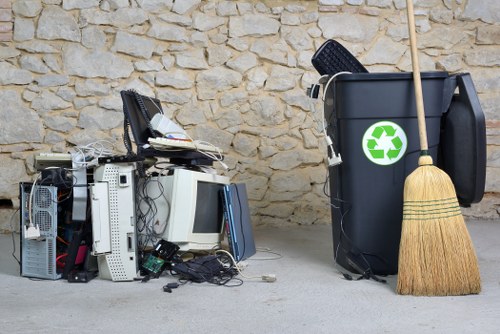 Public liability insurance is the foundation of responsible junk waste collection. A quality policy covers accidental injury to members of the public, damage to third-party property, and legal costs arising from claims. For junk and waste removal providers, appropriate limits and clear policy wording are essential; this ensures customers and contractors are protected if a load shifts, debris damages property, or a passerby is injured during collection.
Staff Training and Competency for Waste Removal Services
Staff competence is as important as the insurance policy. All operatives involved in junk removal must undergo structured training that covers safe lifting techniques, correct use of lifting aids, vehicle loading and securing, and site-specific hazards. Training is delivered through a combination of classroom instruction, hands-on practice, and supervised on-the-job assessments, ensuring every team member can perform duties safely and consistently.
Training Components
Key training modules include:- Manual handling and ergonomics to reduce musculoskeletal injuries.
- Safe operation of compact loaders and other equipment commonly used in junk removal.
- Hazard recognition for hazardous waste and potential biohazards (e.g., sharp objects, asbestos suspect materials).
- Customer site communication and cordoning-off procedures to protect the public.
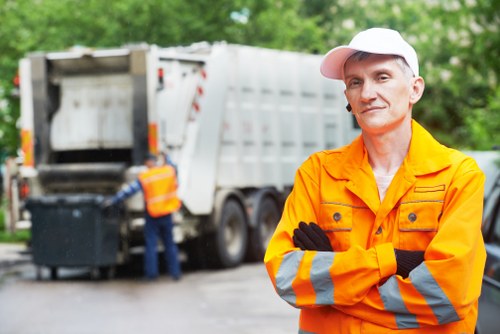
PPE (personal protective equipment) is non-negotiable on every junk waste removal job. Standard issue PPE includes high-visibility clothing, steel-toe boots, heavy-duty gloves, eye protection and, where appropriate, respiratory protection. For waste removal services that encounter specific hazards—such as chemical residues or fine dust—additional PPE like chemical splash suits or P3 respirators is supplied and used according to assessed risk.
 Operational policies mandate PPE inspection and maintenance: team members check equipment before each shift, report defects immediately, and replace damaged items without delay. Supervisors enforce PPE rules on site; failure to wear the required protection is addressed promptly to maintain safety standards and uphold insurance conditions.
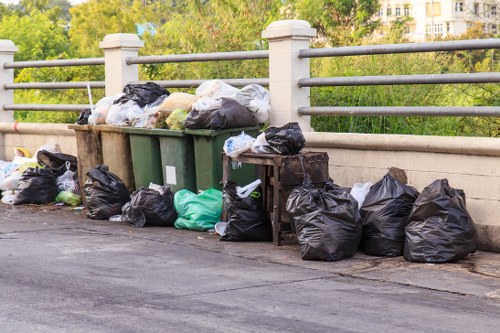 The risk assessment process begins before the crew arrives and continues through job completion. Effective risk assessment for junk removal tasks considers the site environment, the type and volume of material, access constraints, traffic interaction, and the potential presence of hazardous items. A written assessment supports decision-making about manpower, equipment, load handling, and disposal options.
Step-by-step Risk Assessment Process
Our structured approach follows a clear sequence:- Pre-job reconnaissance: review bookings, photographs, and site descriptions to identify obvious hazards.
- On-site survey: a nominated supervisor conducts a walkaround to confirm conditions, identify hidden risks, and establish safe working zones.
- Documentation: hazards and control measures are recorded, with residual risk rated and communicated to the team.
Control measures may include traffic management, special handling procedures for bulky or awkward items, segregation of recyclable materials, or the use of mechanical aids. For suspect hazardous waste the protocol is to stop work, cordon the area, and consult waste regulations before proceeding. This ensures compliance with environmental rules and protects both the public and operatives.
Continuous Improvement and Auditing
Safety and insurance rely on ongoing review. Regular audits of junk waste collection operations examine training records, incident reports, PPE inventories, vehicle maintenance, and adherence to risk assessments. Findings lead to targeted refresher training, policy updates, or equipment upgrades to reduce future risk and demonstrate due diligence to insurers.Insurance underwriters look favorably on companies that can show a documented safety management system: up-to-date policies, consistent training logs, robust PPE regimes, and comprehensive risk assessments. These elements together reduce claim frequency and severity, benefiting customers and sustaining viable waste removal operations.
In summary, professional junk removal and waste collection require more than a van and a crew. They demand public liability insurance that matches operational risk, an investment in staff training, enforced PPE standards, and a disciplined risk assessment process. By integrating these components, a junk waste removal provider protects people, property, and the environment while delivering reliable, safe, and compliant waste removal services.